

Fuel prices are increasing, daily travel is getting longer, and your monthly EMI already takes a big part of your income. Because of this, every extra fuel expense starts to matter.
Petrol vs Hybrid: Is a hybrid SUV worth the higher price in India, or is a petrol SUV still the better option?
In this article, we will explain everything in simple terms — fuel cost, mileage, and long-term savings — so you can decide which option saves you more money in 2026.

Setting the Context (India 2026)
In 2026, petrol prices in major Indian cities like Delhi, Mumbai, and Bangalore are still high and unpredictable. For daily commuters, this directly impacts monthly expenses, making fuel efficiency a top priority.
In the debate of petrol vs hybrid, rising fuel costs are the biggest reason buyers are now rethinking their choice.
At the same time, hybrid SUVs are becoming more popular in India. Brands like Maruti Suzuki, Toyota, Honda, and Hyundai are offering strong hybrid options that promise better mileage without range anxiety.
Because of this shift, the petrol vs hybrid decision matters more than ever. It’s no longer just about the car’s price — it’s about long-term savings, running cost, and how much you spend on fuel every month.
Understanding the Cost Difference
When comparing petrol vs hybrid SUVs, the biggest difference comes in the initial cost. Hybrid cars use advanced technology, which makes them more expensive than regular petrol vehicles.
🚗 Purchase Price Gap
Hybrid SUVs in India usually cost ₹3–8 lakh more than petrol versions due to the battery and electric motor. For example, a ₹15 lakh petrol SUV may cost ₹18–23 lakh in hybrid form.
🏦 EMI Comparison (5-Year Loan)
A higher price means higher EMI. A petrol SUV loan may cost around ₹30,000/month, while a hybrid could go up to ₹40,000/month. That’s an extra ₹8,000–₹12,000 every month.
🛡️ Insurance Cost Difference
Hybrid SUVs have slightly higher insurance costs because of their higher value and battery system. Expect to pay around ₹5,000–₹15,000 more per year compared to petrol SUVs.
In the petrol vs hybrid comparison, hybrids cost more upfront — but the real question is whether fuel savings can recover this extra cost.
Fuel Cost Breakdown (Petrol vs Hybrid)
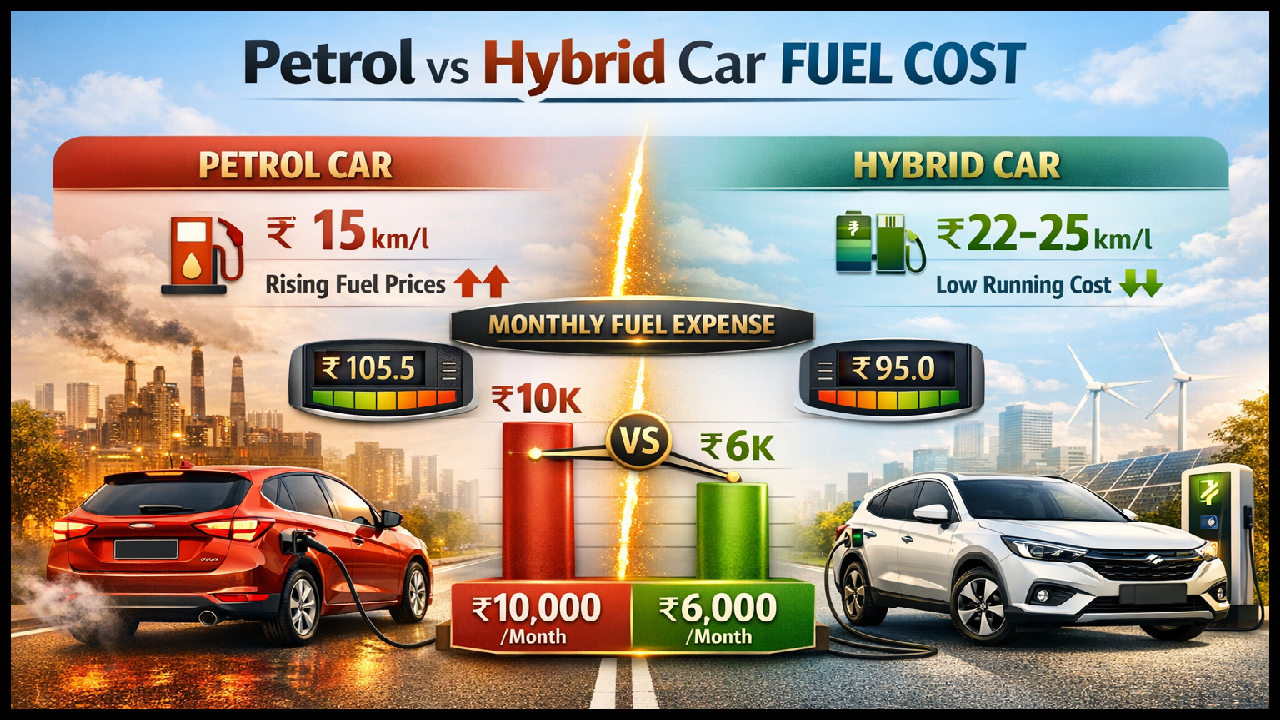
This is where the real difference between petrol vs hybrid SUVs becomes clear — fuel savings. Hybrid cars give better mileage, which directly reduces your monthly fuel expense.
Petrol SUV: 12–15 km/l
Hybrid SUV: 18–23 km/l
| Details | Petrol SUV | Hybrid SUV |
|---|---|---|
| Monthly Driving | 1200 km | 1200 km |
| Mileage | 14 km/l | 20 km/l |
| Fuel Used | ~85 litres | ~60 litres |
| Fuel Price | ₹100/litre | ₹100/litre |
| Monthly Cost | ₹8,500 | ₹6,000 |
📅 Annual Savings: ₹25,000 – ₹30,000
In the petrol vs hybrid comparison, hybrid SUVs may cost more initially, but they help you save a significant amount on fuel every year.
Ownership Cost Over 5 Years (Petrol vs Hybrid)
In the petrol vs hybrid comparison, the real decision is not just about the buying price — it’s about how much you spend over time. Here’s a simple 5-year ownership breakdown:
| Cost Head | Petrol SUV | Hybrid SUV |
|---|---|---|
| Purchase Price | Lower ✅ | Higher ❌ |
| Fuel Cost (5 Years) | Higher ❌ | Lower ✅ |
| Maintenance | Lower ✅ | Moderate ⚖️ |
| Insurance | Lower ✅ | Slightly Higher ⚖️ |
| Resale Value | Normal ⚖️ | Better (Growing) ✅ |
| Total Cost (5 Years) | Medium | Can Be Similar or Lower 💰 |
In the petrol vs hybrid comparison, hybrids cost more initially but save money on fuel. If your monthly driving is high, the hybrid can recover its extra cost within 4–6 years.
Low usage → Petrol SUV is better
High usage (1000+ km/month) → Hybrid SUV saves more
GST & Tax Comparison (Petrol vs Hybrid)
In the petrol vs hybrid comparison, taxation depends on vehicle size. Recent updates have introduced different GST brackets for hybrid cars, which directly affect their pricing.
GST: 18% (Reduced ✅)
Cess: Minimal
👉 Makes compact hybrids more affordable compared to earlier.
Total Tax: ~40% (GST + Cess ❌)
👉 Keeps hybrid SUVs expensive despite better mileage.
| Category | Petrol SUV Tax | Hybrid SUV Tax |
|---|---|---|
| Small Cars (< 4m) | ~18%–28% | 18% (Reduced ✅) |
| Mid-size SUVs | 28% + cess | ~40% total ❌ |
Toyota Hyryder Hybrid, Maruti Grand Vitara Hybrid, Honda City Hybrid, Toyota Innova Hycross Hybrid
In the petrol vs hybrid comparison, small hybrids are becoming more affordable due to lower GST, but mid-size hybrid SUVs still remain expensive because of high tax (~40%).
Real-World Use Case Scenarios (Petrol vs Hybrid)
In the petrol vs hybrid comparison, your driving pattern decides the winner. Here are three common real-life scenarios:
🏙️ Daily City (30–50 km/day)
Stop-go traffic and signals help hybrids use electric mode, reducing fuel usage significantly.
Save ₹2,000–₹3,000/month
🛣️ Highway Driving
At constant speeds, petrol engines are already efficient. Hybrid advantage is smaller but still present.
Difference is minimal
🚗 Weekend Use Only
Low usage means fuel savings are limited, so recovering hybrid cost becomes difficult.
Lower cost makes more sense
In the petrol vs hybrid debate — high usage = hybrid wins, while low usage = petrol is better.
Hidden Factors People Ignore (Petrol vs Hybrid)
In the petrol vs hybrid comparison, buyers often focus only on price and mileage. But these hidden factors can impact your long-term ownership experience.
🔋 Battery Replacement
Hybrid batteries typically last 8–10 years. Replacement may cost around ₹1.5–₹3 lakh, but most cars come with long warranty coverage.
💰 Resale Value
Petrol cars have stable resale, but hybrid demand is growing due to better fuel efficiency, which may improve resale value over time.
🛠️ Service Network
Petrol cars are easy to service anywhere, while hybrids may need trained technicians. In smaller cities, service availability is still improving.
🔇 Driving Comfort (NVH)
Hybrids offer a quieter and smoother drive, especially in city traffic, while petrol cars have more engine noise and vibration.
In the petrol vs hybrid debate, hidden factors like comfort, service, and resale can matter just as much as fuel savings in the long run.
Final Verdict (Petrol vs Hybrid)
In the petrol vs hybrid debate, the final answer depends on one simple factor — how much you drive every month.
Hybrid SUVs cost ₹3–8 lakh more but save ₹25,000–₹40,000/year on fuel.
👉 High usage → recover in 3–5 years
👉 Low usage → may take 6–8+ years
- Drive 1000+ km/month
- Mostly city usage
- Keeping car for 5+ years
- Drive less than 800–1000 km/month
- Mostly highway or occasional use
- Want lower upfront cost
If you drive around 1,200 km/month in the city, a hybrid SUV can save you ₹1.5–₹2 lakh over 5 years compared to petrol.
High usage → Hybrid Wins ✅
Low usage → Petrol Wins ✅
Final Verdict (Petrol vs Hybrid)
In the petrol vs hybrid debate, the final answer depends on one simple factor — how much you drive every month.
Hybrid SUVs cost ₹3–8 lakh more but save ₹25,000–₹40,000/year on fuel.
👉 High usage → recover in 3–5 years
👉 Low usage → may take 6–8+ years
- Drive 1000+ km/month
- Mostly city usage
- Keeping car for 5+ years
- Drive less than 800–1000 km/month
- Mostly highway or occasional use
- Want lower upfront cost
If you drive around 1,200 km/month in the city, a hybrid SUV can save you ₹1.5–₹2 lakh over 5 years.
❓ Frequently Asked Questions
Is hybrid better than petrol for daily use?
Yes, in the petrol vs hybrid comparison, hybrids are better for daily city use because they save more fuel in traffic.
How long does it take to recover hybrid cost?
It usually takes around 3–5 years with high usage and 6–8 years with low usage.
Is hybrid maintenance expensive?
Maintenance is slightly higher than petrol, but not significantly. Most hybrid batteries come with long warranties.
Which is better in petrol vs hybrid for low usage?
For low usage, petrol SUVs are better because the higher cost of hybrid cannot be recovered easily.
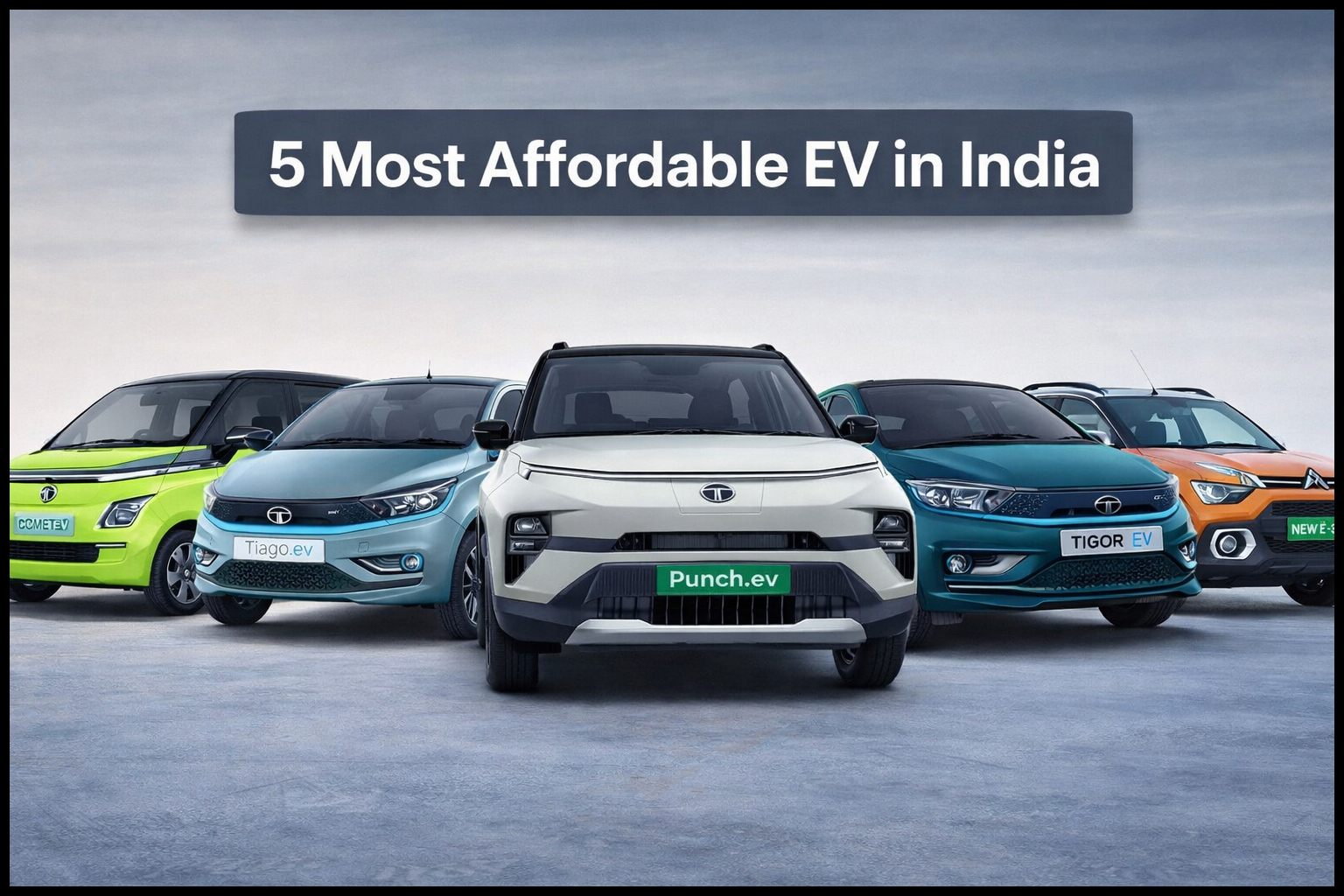
5 Most Affordable Electric Vehicles in India
Looking to switch to electric without spending a fortune? Explore the top 5 budget-friendly EVs in India with impressive range, low running costs, modern features, and government incentives. Compare price, battery range, and value before making your decision.
Read Full Guide →